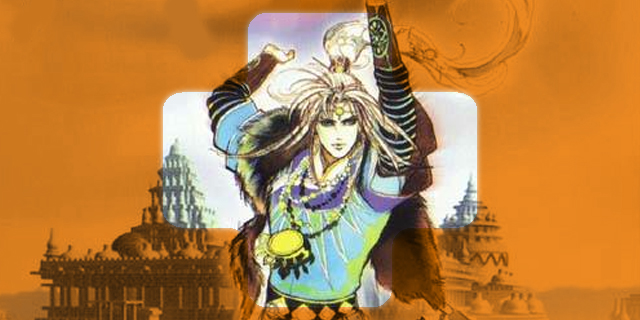
Back before Eidos was purchased by Square Enix, it was doing a lot of interesting things. I say interesting, but I actually mean strange. During the PS2 era, it published a lot of bizarre, poorly-received games such as 25 to Life, Rogue Trooper, Total Overdose and Reservoir Dogs. The company had a few good titles under its belt as well, but this was an era when Eidos wasn’t afraid to make some weird choices, for better or worse. One of those decisions was establishing the Fresh Games label in 2002, a short-lived subsection of games that Eidos localized from Japan. It represented the kind of off-brand strategies you rarely (if ever) see from big publishers these days, and it’s something that I miss.
READ MORE

Imagine you’re playing a game in a series you particularly like. In the middle of it, you stop and think, “What if this game was actually something entirely different?” I run into those moments countless times, and yet when I actually stop to consider how that would turn, out I can’t help but become obsessed with this nonexistent game. Developers and publishers love to graft the ideas and design philosophies of certain series onto the core of different genres, either for the potential to expand the series’ audience or perhaps to simply try something different. Some of these ideas seem like obvious choices, but others might leave you scratching your head.
Regardless of the results and the potential backlash from fans, I love to see developers try new things with franchises. What’s the harm in a little experimentation?
READ MORE

If you’ve been reading this column for a while, it’s painfully obvious how much I care about player agency in games. From meaningful gameplay choices to moral choices (especially those that don’t just skew black and white), I’m all about games that allow the player to insert themselves (or some part of themselves) into the experience. Whether it’s creating a character or simply choosing between blue and red during pivotal story scenes, I find our implementation of choices to be one of the coolest things the gaming industry has focused more on in the past five or so years. READ MORE

During a recent interview with Geoff Keighley, Metal Gear creator Hideo Kojima discussed his reasoning behind the promotional campaign for The Phantom Pain, now officially known as Metal Gear Solid V. He did this to essentially get people actively chattering and deciphering the many mysteries behind The Phantom Pain and the then-unknown game developer, Moby Dick Studio.
While the secret behind this charade was pieced together rather quickly, it still led to many interesting and entertaining discussions that I truly missed getting involved with. It shows that developers like Kojima know exactly what they need to do in order to get people talking, and just how much fun it can be to speculate.
READ MORE

If you boil many games down to their most basic elements, it will be easy to see that a lot of them deal with survival. In Call of Duty, you need to survive the countless baddies who are out for blood. In Super Mario Bros., your duty is to save the princess, but your most basic goal is to survive. You see where I’m going with this. Survival is a key component of most games where your character can die, which is obvious, but it’s something we often forget about, because we’re too busy being distracted by the countless other things games have to offer these days.
There have been numerous titles released in recent years that could fall under the “survival” subgenre. The mere act of attempting to survive while also exploring your surroundings is nothing new, but when examined and expanded upon as closely as some games do, it can lead to an unforgettable experience.
READ MORE

We all like game characters we can relate to, especially protagonists. We want to be able to take control of a like-minded individual and guide them through obstacles, whatever they may be, to ultimately see them succeed. It’s not all fun and games, though. Witnessing a character we’ve grown to like as he or she struggles is never enjoyable. However, it makes overcoming that inevitable challenge that much more rewarding, especially if it happens under your control. READ MORE

As someone who grew up playing as many JRPGs as one person possibly could, it’s safe to say that I’ve always loved the genre. It was easy to see why, growing up with the classic Final Fantasy games, Phantasy Star, Breath of Fire, Earthbound and so many more. My love affair with the genre continued well into the life of the PS1 and PS2, only to die down once this current generation of consoles hit the market. There were some good JRPGs to be found, sure, but they were so few and far between that it was hard to get excited about them anymore.
And then Ni no Kuni came along. It’s a game that manages to capture everything I love about JRPGs and then some. I consider it a hallmark of the genre, but does it scratch that itch purely due to nostalgia, or is there more at the heart of Ni no Kuni that helps it stand out? READ MORE

A few months back, I wrote about the importance of retracing our steps and going back to the games of the past for inspiration. Titles such as Fez became the hallmark of how to create something (mostly) original while resurfacing things from our past to create a more memorable experience. On a similar note, a year ago I wrote about franchise revivals, discussing the best ways to go about handling the resurrection of classic franchises. Unfortunately, both of these topics have a downside. While playing two of 2012’s big releases, I’ve discovered that some franchises and, by extension, game mechanics deserve to be left in the past. READ MORE

I’m not a big fan of PC gaming, at least not anymore. Yet, every now and again, a small title comes along that catches my attention and practically begs me to play it. These are usually indie darlings with a lot of interesting elements that lead to an uneven, but ultimately rewarding experience. Cart Life, a “retail simulator for Windows” that was released back in 2011, is one such game. It’s a title that demands so much, but in return gives you a look at the life of a character with a somewhat common and compelling story to tell.
Above all else, Cart Life demonstrates that you can ask the player to embark on the most tedious of journeys, if the end goal is ultimately something worth caring about. READ MORE

When doing my usual end of the year catch-up on games I missed in 2012, I found myself becoming addicted to XCOM: Enemy Unknown. Yes, the game is fantastic, but it brought to mind something else that I find intriguing about it and a few other games. The idea of permanent death (or permadeath) is something that you don’t see too often, but when it’s used, it can be one of the most effective ways to keep a player coming back for more. READ MORE