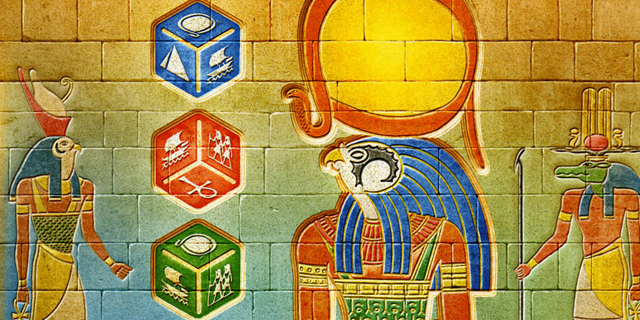
I’ve discussed Reiner Knizia’s Ra before (twice, actually), and it remains both one of the premier tile-based auction games available and a great “gateway” game to modern boardgaming. Auctions are a main mechanic in that game, but you score points via set collection, and there is no small element of “press your luck” when it comes to drawing tiles out of the bag hoping to avoid the dreaded final Ra tile. As it turns out, “press your luck” and set collection don’t only work with tile-based games, as Knizia was also able to substitute square cardboard for plastic cubes with his 2009 spin-off title Ra: the Dice Game. READ MORE
Genre 101 is a new series that looks at the past and present of a game genre to find lessons about what defines it. Each installment, Graham Russell brings in an expert “guest lecturer” to discuss significant and representative releases and topics. We start with the first-person shooter, and guest lecturer Andrew Passafiume.
Labyrinthine beginnings
 Andrew Passafiume: Very few people talk about (or are aware of) what is considered by many to be the first “first-person shooter.” Catacomb 3-D, developed by id Software, technically isn’t a shooter in the traditional sense (you use magic instead of guns), yet it is the game that established the id formula and eventually led the company down the path to create the shooters we are more familiar with. While many people consider Wolfenstein 3D as the shooter that started it all, they often overlook Catacomb and how it essentially moved the industry towards the future of first-person shooters. READ MORE

Most multiplayer games are designed to be played in a single evening. This makes a lot of sense, as it can be a huge headache to organize multiple play gatherings, especially with the exact same configuration of players, and an experience that’s easier to get into generally has a much better chance of success.
If you go through the effort, though, longer multiplayer experiences can be truly memorable and magical in ways that one-off party play just can’t. READ MORE
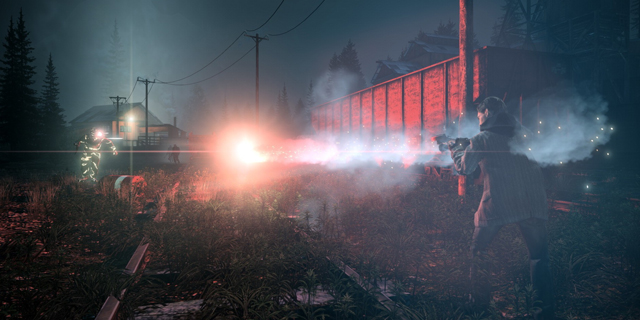
I can picture it now. A couple of young game industry upstarts have finally paid their dues, and are now at the helm of making a brand new game. It’s going to be released on all the systems. They’re talking to each other excitedly about what kind of game they want to make. Ideas are thrown around, gameplay elements are discussed and details are hammered out. They rehearse their pitch; they’re prepared for the studio heads.
Reality sinks in, and it’s not nearly as fun. The young developer’s faces shrink with each passing moment. No, you can’t introduce this wildly revolutionary idea. No, that’s not going to work for us. No, we’re not going to take that risk and no, you’re not going to disagree with us because we’re the money and you’re not. READ MORE
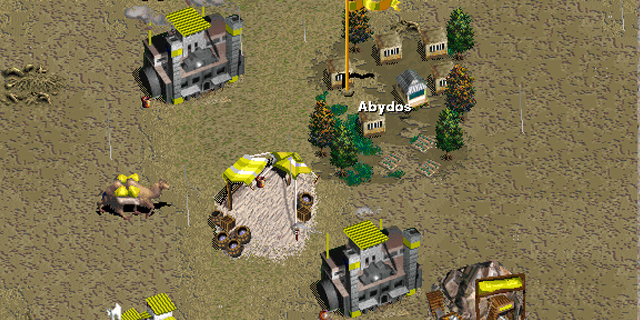
You may find our reputation a little bit exaggerated. We are traders. We haven’t shied from war, but we do not seek it. We just train our workers and exploit our mines better than anyone else. That isn’t a crime, isn’t it? What we want is to see our empire flourish, to grow and prosper.
We are builders. But your kingdom was in our way. READ MORE